
Why Do Drippers Keep Failing?
Replacing a single dripper rarely fixes the problem, because the cause is usually inside the line. This article explains what narrows the line and how to prevent it.
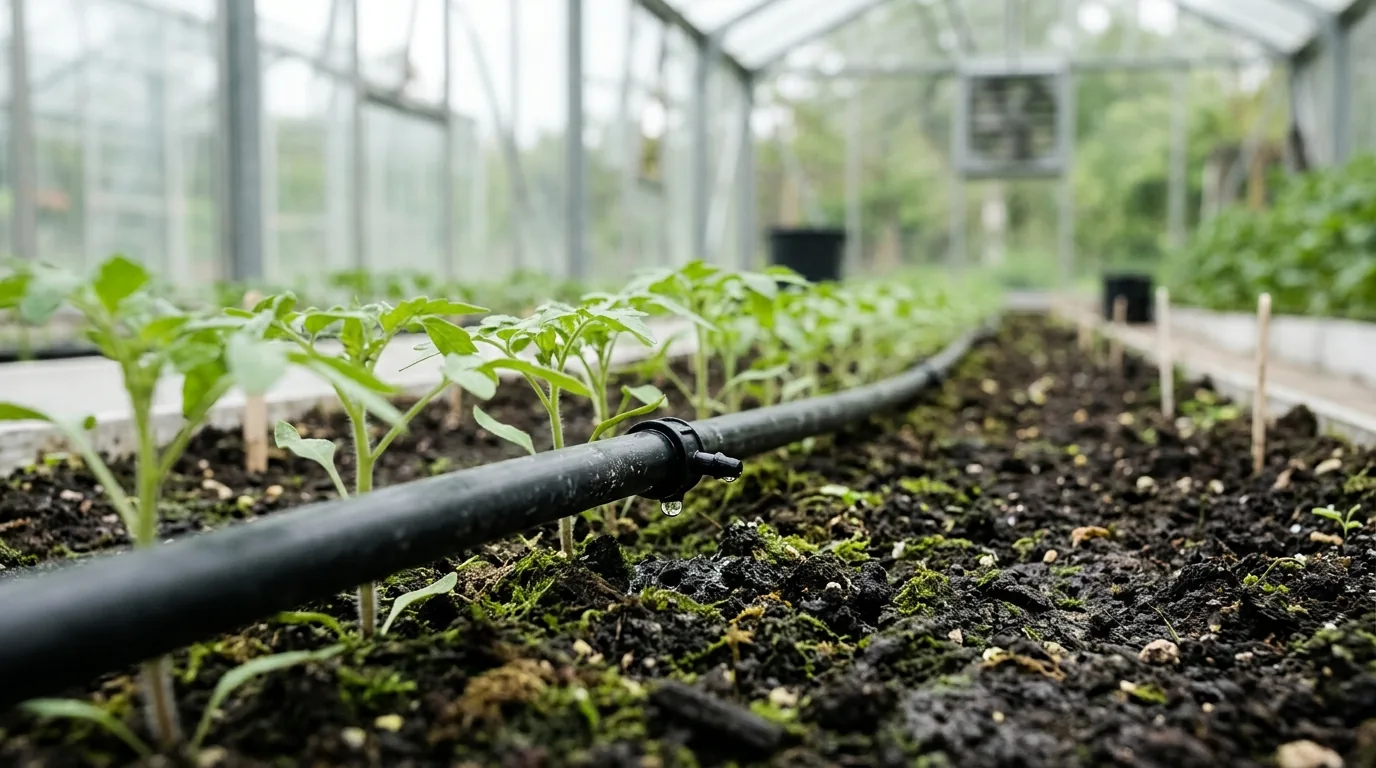
Hello. Today I want to talk about a very common mistake that gardeners and greenhouse owners repeat every year without noticing.
Say one row in your greenhouse is growing poorly. You look under the plant, and the soil is dry. You check the dripper, and it isn't giving water. You replace it, and the problem is solved.
A month later, two more drippers in the same row cause the same problem. You replace those too. After a while, it happens again.
Here is the important point that many people don't know:
If several drippers in one row start having problems one after another within a short time, the problem is not actually the dripper.
That dripper is simply the weakest point of a line that is narrowing from the inside.
In other words, the problem is in the line itself, not in the individual parts attached to it.
What Causes the Narrowing?
This narrowing is mostly caused by 3 factors:
Calcium carbonate buildup, if your well water is hard.
Algae and iron bacteria, if the water stays in a tank or pond for a long time and gets sunlight.
Fine sand particles, which pass through the filter and settle inside the line over time.
Why Doesn't Replacing the Dripper Work?
When you replace only the broken dripper, you are not removing the cause, only the symptom. That is why, after a while, the same problem shows up again in another part of the same line. And every time you replace a dripper, your costs go up.
What Is the Right Approach?
The right approach is not to fix the problem after it happens, but to prevent it in advance. Instead of waiting for the line to get completely blocked, depending on the hardness of the water, you can flush the whole line with a diluted, low-concentration acid solution about every 1–2 weeks. For example, nitric acid or citric acid can be used at a low concentration. If your water source is a pond, you should also protect the water from direct sunlight to prevent algae.
But first of all, have your water's hardness and mineral content tested, because the acid dose and the flushing interval depend on exactly these values. The same dose and the same program don't work for every farm.